Welcome to You Are Supported (YAS): Your Partner in Recovery
At You Are Supported (YAS), we believe in empowering individuals on their healing journey.
Founded by a team of medical professionals and survivors, YAS was created to fill a critical gap in post-surgery care: providing comfortable, practical, and supportive solutions for those recovering from chest and upper torso trauma.
Our mission is simple—You Are Supported in every step of your recovery, both physically and emotionally.
Introducing our flagship product:
The YAS Bra
Specially designed with your needs in mind, this bra offers
unparalleled support and comfort like no other during your recovery process.
The Ultimate Post Surgery Bra that's adaptable
- Multiple Closures: The bra features a post-surgery bra front closure that allows you to easily wear and remove the garment without strain or discomfort. As well as right and left side closures for those with shoulder impingements or temporary lack of motion for a variety of reasons.
- Velcro, Not Metal: Prefer something even simpler? Our bra also has Velcro closures with 2" widths for comfort, ensuring a secure fit with minimal effort.
- Premium Materials: Made from soft, breathable fabric, this bra minimizes irritation and promotes healthy healing.





- Customizable Fit: Adjustable straps, chest band, closures for a range of sizes to ensure the perfect fit and desired amount of compression for every body type.
FAQS
Who can benefit from wearing this bra?
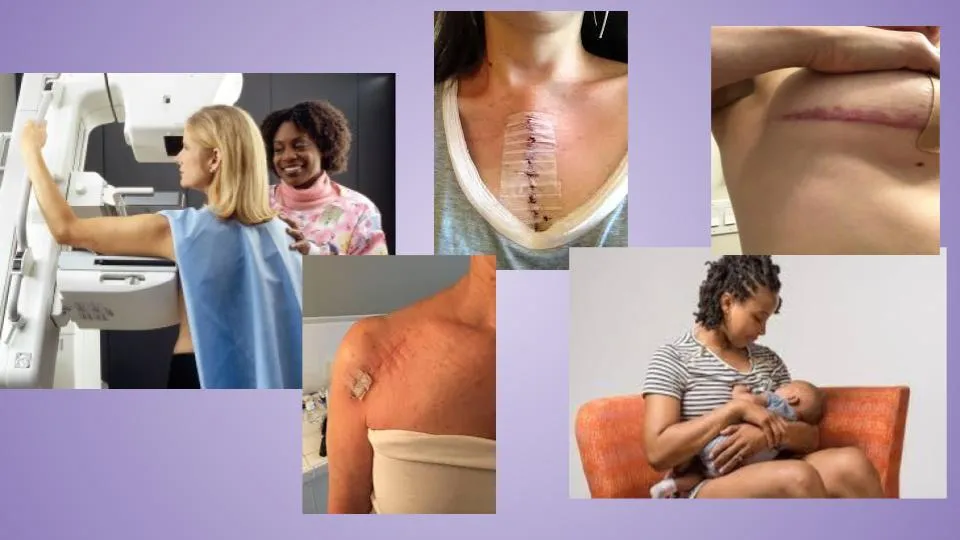
This bra is designed for anyone who has undergone upper torso and chest-trauma, including shoulder impingements mastectomies, lumpectomies, and reconstructive surgeries.
It’s also beneficial for those recovering from biopsies, mastitis, fibroids, calcifications, and even breastfeeding moms who need ice pads or relief from an overzealous mammogram. The bra is designed to provide comfort, breathability, and easy access to JP drains post-surgery.
What features make this bra suitable for post-surgery recovery?
The bra is designed with features that speed recuperation and provide maximum comfort:
- Thick elastic band with two unique drain access points (patent pending) for gentle accessibility and support.
- Front and side openings and strap closures with adjustable, wide luxe Velcro bands for ease of use and breast expansion.
- Breathable, EPA-approved antimicrobial treated mesh lining to support breast and nipple reconstruction.
- Lining pockets in cups and both sides for compression pads, ice and cooling packs to provide post-surgery relief.
- Made of 95% Polyester and 5% Spandex, with plastic buckle adjusters, Velcro, and a wire-free design.
How does this bra support emotional healing?
We understand that healing is not just physical, but emotional as well. That’s why our bras are designed to be comforting and beautiful, helping you feel more confident and supported during your recovery. We strive to build a caring relationship with our customers, offering not just a product, but compassionate support during what may be one of the most challenging times in your life.
Where are these bras designed and manufactured?
Our bras are designed with input from patients and clinicians in the USA to ensure they meet the highest standards of comfort and functionality during recovery.
Recent TitTalk Blogs
When "AI" Means Autoimmune
When "AI" Means Autoimmune: What 450 Million People and Their Loved Ones Need to Know
First, Let's Clear Something Up — "AI" Doesn't Mean Artificial Intelligence Here
When you see "AI" attached to arthritis, the mind goes somewhere else first. Algorithms. Chatbots. Technology. That's fair — it's 2026 and "AI" is everywhere.
But in this context, AI stands for autoimmune and autoinflammatory. And the diseases that fall under that label affect more people worldwide than most of us realize — including, possibly, someone sitting at your kitchen table.
What AiArthritis Actually Stands For
AiArthritis is the shorthand used by the International Foundation for Autoimmune and Autoinflammatory Arthritis. It covers a wide range of diseases where the immune system, instead of protecting the body, turns on it. The result is chronic inflammation that can affect joints, tissues, and organs — often for life.
Autoimmune vs. Autoinflammatory — What's the Difference?
In autoimmune diseases, the body produces antibodies that mistakenly attack its own healthy tissue. In autoinflammatory diseases, the innate immune system triggers repeated inflammation episodes without those antibodies present. Different mechanisms, but both cause real and lasting damage.
Why the Distinction Matters for Diagnosis and Treatment
Getting the right diagnosis depends on understanding which type of immune response is driving the disease. Many people spend years being told their symptoms are stress or aging before landing on the correct answer. Knowing these distinctions — and pushing for proper testing — can shorten that road.
These Are Full-Body Diseases — Not Just "Bad Joints"
Ask most people what autoimmune arthritis looks like and they'll picture swollen knuckles. Stiff fingers in the morning. Maybe a cane.
That's not wrong. But it's about 10% of the picture.
Joints, Tissues, Organs — The Full Picture
AiArthritis diseases are systemic. The immune system isn't only attacking the joints. It's sending misdirected fire throughout the body — into connective tissue, skin, lungs, heart, eyes, kidneys. Wherever there's tissue that can be inflamed, it can be a target.
A person with Rheumatoid Arthritis can develop inflammation around the heart or in the lining of the lungs. Someone with Lupus can have kidney involvement that never shows up as joint pain at all. Sjögren's Disease can affect eating, speaking, and vision before a single joint ever swells.
The joints are often where it starts. They're rarely where it ends.
The Diseases You May Not Have Connected to Arthritis
When most of us hear "arthritis," we picture wear-and-tear in older adults. AiArthritis diseases are different. They include Rheumatoid Arthritis, Psoriatic Arthritis, Lupus, Sjögren's Disease, Axial Spondyloarthritis, Still's Disease, Crohn's Disease, Sarcoidosis, and more than a dozen others. What connects them is an immune system turned against itself. Some of these I’ve never heard of before.
Many people go years without a correct diagnosis. Some get told it's stress. Or anxiety. The path from first symptom to accurate answer is often long, and the detours are exhausting.
The Invisible Symptoms No One Talks About
Fatigue is one of the most common and least understood parts of these diseases. Not tired — deep in your bones fatigue. The kind that doesn't lift after sleep, that makes a full day feel impossible, that nobody around you can see.
Add brain fog, nerve pain, skin involvement, digestive problems, and the daily negotiation with a body that won't cooperate. People lose grip strength. They lose range of motion in their shoulders. They lose the ability to do things they never thought twice about — opening a jar, raising both arms overhead, pulling on a shirt.
That last one matters more than most people realize. When getting dressed becomes a physical challenge, it shapes the whole day. For 450 million people worldwide living with autoimmune and autoinflammatory diseases, it's a challenge that shows up before breakfast. It's the part that rarely makes it into a doctor's notes, but shapes daily life the most.
450 Million People — And the Ones Who Love Them
When a family member gets diagnosed with an autoimmune disease, there's a moment where you realize you don't actually know what that means. You know the word. You've probably heard it before. But you don't know what it means for a Tuesday morning, or a holiday dinner, or a phone call where they sound more tired than usual.
These diseases don't arrive alone. They move into the whole household.
When the Diagnosis Belongs to Someone You Love
There are 450 million people worldwide living with AiArthritis diseases. That number is staggering — and abstract until it has a name you recognize.
When someone you love gets diagnosed, the learning curve is steep. The disease names are long. The list of possible symptoms is longer. Information online swings between overly clinical and deeply frightening, with very little in between.
What most people want, at first, is simple: to understand what their person is dealing with. To stop saying the wrong thing. To know how to help without hovering.
What Caregivers and Family Members Are Really Facing
Caregivers don't always call themselves caregivers. They're spouses, kids, siblings, friends — the ones driving to appointments, picking up prescriptions, and quietly rearranging plans when a flare hits.
They're also the ones going to bed worried and waking up not knowing what kind of day it's going to be. That uncertainty is its own kind of weight. And yet caregiver support rarely comes up in the same breath as patient support. The people in the circle around the patient are absorbing a lot, often without much acknowledgment or guidance.
The Emotional Weight That Doesn't Show Up on a Lab Report
Here's what doesn't get said enough: grief is part of this. Grief for the person your loved one was before symptoms started. Grief for the plans that shifted. Grief for the version of life you both expected.
That's not pessimism. It's honest. And naming it matters, because the families who struggle most are often the ones who feel guilty for struggling at all.
The AiArthritis community knows this. Their resources include support for the whole circle around the patient — because the people who show up, ask questions, and refuse to let someone navigate this alone are part of what makes living with these diseases survivable.
You don't have to know everything to be helpful. You just have to stay.
The Morning Nobody Talks About
There's a version of chronic illness that shows up in awareness campaigns. Someone at the finish line of a 5K. Hands raised. Smiling. That version is real. People with AiArthritis diseases can do remarkable things.
But that's not 7am on a hard day.
When Getting Dressed Becomes the Hardest Part of the Day
On a hard day, getting dressed is a negotiation. The body is stiff. The shoulders won't cooperate. Lifting both arms overhead — something most people do without a thought — can feel impossible.
A regular bra becomes a problem. The hooks are in the back. Your fingers don't want to work yet. Your arms can't reach. You're standing in your own bedroom needing help with something you've done alone since you were eight years old.
That moment is small. And it is not small at all.
For people living with Rheumatoid Arthritis, Lupus, Psoriatic Arthritis, and other AiArthritis diseases, this is a daily reality that rarely makes it into a clinical conversation. Doctors track inflammation markers and joint damage. They don't usually ask how long it took you to get dressed this morning.
Raised Arms, Limited Grip, and the Tasks We Take for Granted
Range of motion loss is one of the most functionally limiting parts of these diseases. When shoulder joints are inflamed, overhead movement becomes painful or impossible. When hands and wrists are affected, grip strength drops. Fine motor tasks — buttons, zippers, clasps — become obstacles.
The list adds up fast. Pulling a shirt over your head. Fastening a bra. Washing your hair. Carrying groceries. Opening a bottle. These are tasks that fill a morning before most people have had coffee. For someone with an AiArthritis disease, each one requires a plan.
This is also where caregivers get pulled in ways they didn't expect — helping with things that feel deeply personal. Both people in that dynamic deserve better options.
Why Adaptive Support Isn't a Luxury — It's Part of Care
There's a tendency to frame adaptive clothing as a nice-to-have. Something you consider after you've tried everything else. That framing is backwards.
If your body has changed, the things you put on your body should adapt to meet it. That's not a workaround. That's a good design. And for people managing chronic illness, good design on an ordinary Tuesday morning can change the shape of the whole day.
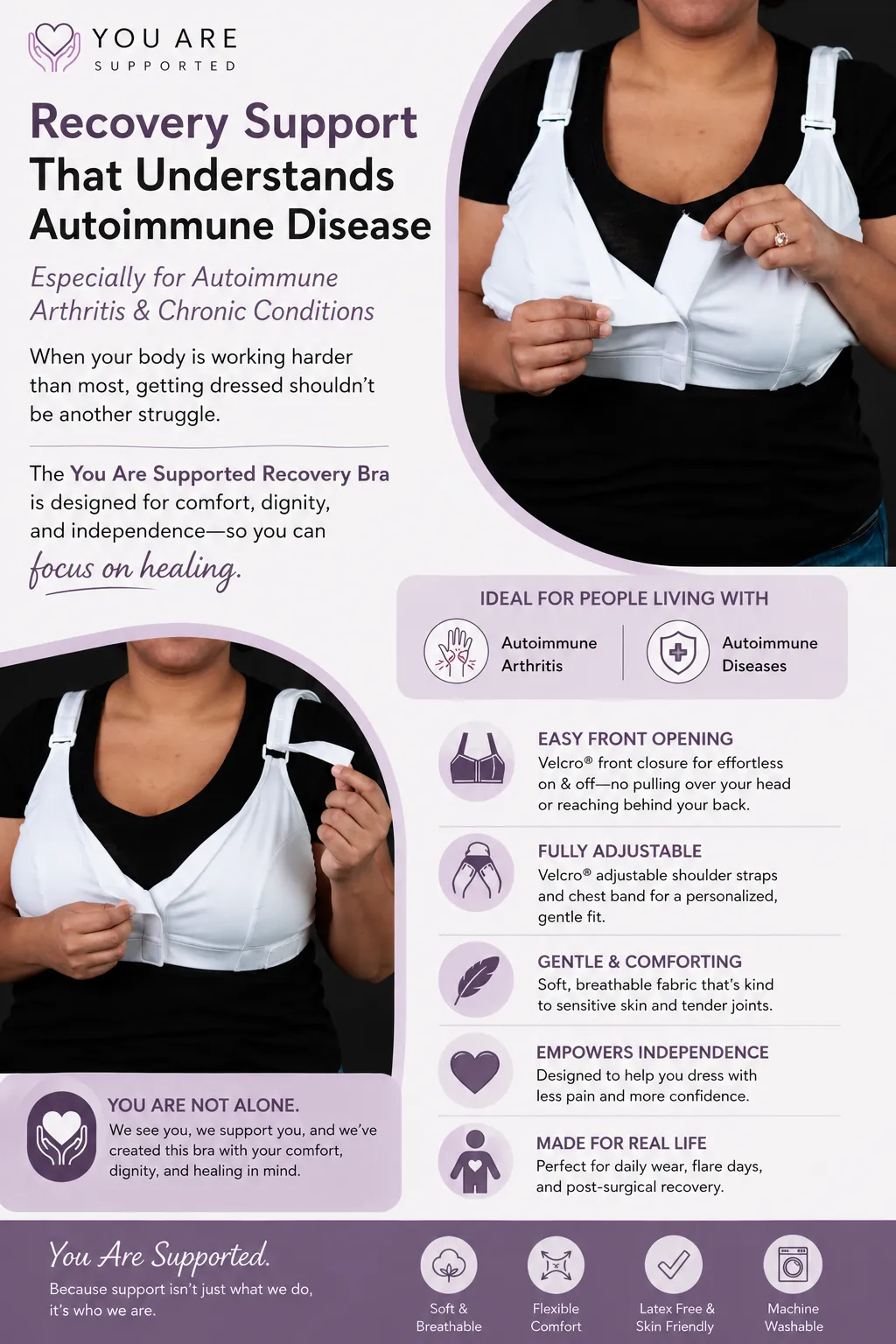
Designed for This — How the YAS Recovery Bra Meets People Where They Are
The YAS Recovery Bra didn't come from a product idea. It came from watching people struggle with something that should have been easier, and deciding to do something about it.
You Are Supported was built on a simple premise: if someone's body is already working hard, the things they wear shouldn't make it harder.
Built for Bodies That Are Already Working Hard
Most bras assume full range of motion. Back clasps. Overhead pull-on styles. Underwire. They assume you can reach behind your back, lift both arms, and manage small hardware with your fingers.
For someone managing an AiArthritis disease, those assumptions fall apart fast. The YAS Recovery Bra was designed with occupational and physical therapist input, specifically because getting dressed is a functional challenge, not just a comfort preference.
Four-Way Stretch, No Metal, Front and Side Openings — Why Every Detail Matters
Four-way stretch fabric moves with the body instead of against it. No underwire pressing into inflamed tissue. No rigid structure to fight.
Front and side openings mean no reaching behind your back. No full shoulder mobility required. No grip strength needed to wrestle a back clasp at 7am when your hands haven't loosened up yet.
Each detail sounds small. Together, they're the difference between starting your day with a win or starting it with a struggle.
Multiple Ways to Put It On — Because Not Every Day Is the Same
Living with chronic illness means living with variability. Some mornings the hands work fine. Some mornings they don't. The YAS Recovery Bra works across that range — there's more than one way to put it on, so you're never locked into a method that only works on good days. That flexibility is intentional. It's also rare.
From Surgery Recovery to Chronic Illness — One Garment, Many Journeys
The YAS Recovery Bra was originally designed for people recovering from breast cancer, cardiac, and thoracic surgeries. But the people who reached out after launch made the need clear: it was broader than that.
Stroke survivors. People with arthritis. Breastfeeding moms. Anyone whose body needed support without the fight of a traditional bra. What connected all of them was the same thing: they needed something designed for where their body actually is, not where it used to be.
That's what You Are Supported was built to do.
World AiArthritis Day — Why May 20th Deserves a Spot on Your Calendar
Awareness without action doesn't move anything. World AiArthritis Day exists because 450 million people — and the families around them — deserve a world that actually understands what they're living with.
What Is World AUTOimmune and AUTOinflammatory Arthritis Day?
World AiArthritis Day happens every May 20th. It was created by the International Foundation for Autoimmune and Autoinflammatory Arthritis (AiArthritis) to drive global education about these diseases. The event runs for 47 hours — from 6am EST on May 19th through 5am EST on May 21st — so that every time zone gets a full May 20th to participate.
How 60+ Countries Are DRIVEing Awareness Together
The event has a deliberately fun framework: it's AUTO-themed. Car puns, race analogies, and fuel metaphors make a heavy topic approachable. In 2025, over 40 patient organizations and thousands of individuals, health professionals, and companies worldwide participated. The campaign uses the shared language of driving — because awareness needs fuel, and these diseases need a lot more of it.
How You Can Participate — From Social Media to Fundraising
Participation is open to everyone. You don't need a diagnosis or a platform. You can share posts, start a fundraising team, donate, or simply tell one person something true about these diseases that they didn't know before. Small actions compound.
Follow, Share, and FUEL the Conversation
Follow and tag @aiarthritisday and @ifaiarthritis in your posts. Use the hashtags #AiArthritisDay, #LearnArthritis, #DRIVEawareness, and #AUTOarthritis. Visit aiarthritis.org/aiarthritisday for the full list of ways to get involved. To reach the team directly: [email protected].
FAQ’s
What is the difference between autoimmune and autoinflammatory arthritis?
Autoimmune arthritis involves the body producing antibodies that attack its own tissue. Autoinflammatory arthritis involves the innate immune system triggering inflammation episodes without those antibodies. Both cause chronic inflammation and real physical damage — they just do it through different immune pathways.
Why is AiArthritis considered a full-body disease?
Because the immune system doesn't only target joints. Depending on the specific disease, inflammation can affect the lungs, heart, kidneys, eyes, skin, and digestive system. Joint pain is often the most visible symptom, but the systemic impact goes well beyond it.
Why does it take so long to get an AiArthritis diagnosis?
Because many symptoms — fatigue, pain, brain fog — overlap with other conditions and are easy to dismiss. Bloodwork is sometimes normal even when active inflammation is present. Without a specialist, these diseases are frequently misidentified or missed entirely.
What everyday tasks become difficult with AiArthritis diseases?
Getting dressed, fastening clothing, opening containers, raising arms overhead, washing hair, carrying bags, and managing fine motor tasks like buttons and clasps. Morning is often the hardest time, when joints are stiffest and hands haven't loosened up yet.
How can family members and caregivers best support a loved one with AiArthritis?
Learn the basics of the specific disease. Ask what kind of help is actually wanted — it varies by person and by day. Be consistent. And look for practical solutions that give the person more independence on harder days rather than more reliance on help.
What is the YAS Recovery Bra and who is it designed for?
The YAS Recovery Bra is an adaptive garment from You Are Supported, designed for people whose bodies need support without the physical demands of a traditional bra. It was created for surgical recovery patients — breast cancer, cardiac, thoracic — and has since supported people with chronic illness, stroke survivors, breastfeeding moms, and anyone managing dressing challenges due to limited mobility or grip.
How do I get involved in World AiArthritis Day?
Visit aiarthritis.org/aiarthritisday to register, donate, or start a fundraising team.
Follow @aiarthritisday and @ifaiarthritis on social media and use #AiArthritisDay and #DRIVEawareness to join the global conversation on May 20th.
You Don't Have to Figure This Out Alone
Awareness matters because ignorance has a cost. People with autoimmune and autoinflammatory diseases spend years searching for answers. Families watch someone they love struggle and don't always know how to help. Caregivers carry weight that goes unacknowledged. And every day, simple tasks like getting dressed become quiet battles that nobody outside the disease community thinks to ask about.
That's what this post is really about. Not just the science, and not just the statistics — though both matter. Between knowing what the disease is called and knowing how to actually live with it.
You Are Supported exists in that gap. The YAS Recovery Bra was built for the moment when a body that is already working hard needs one less thing to fight with. It's not a cure. It's not a treatment. It's one less obstacle between waking up and getting on with your day. That counts.
For education, resources, and community: visit aiarthritis.org. For the full World AiArthritis Day event and how to get involved: aiarthritis.org/aiarthritisday. To learn more about the YAS Recovery Bra and the full You Are Supported product line: youaresupported.com.
Because 450 million people — and the ones who love them — deserve to feel exactly that.

Come Be Social
Why did you create this bra?
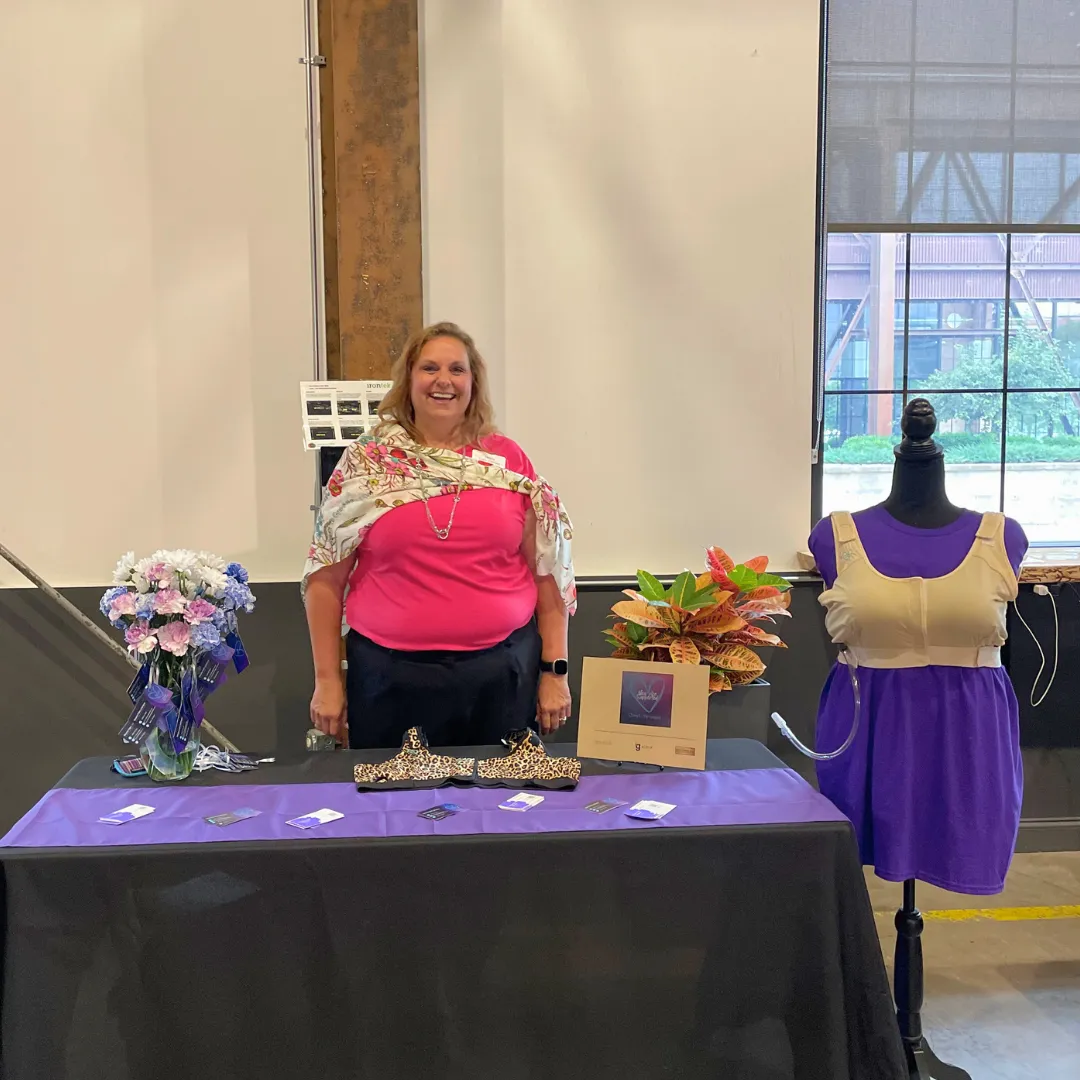
Hi! I'm Deana!
After undergoing four surgeries on my right breast, I experienced the emotional and physical pain of post-surgery recovery.
The hospital-provided support bras were uncomfortable and lacked any sense of femininity or comfort. I wanted to create something that not only supports physically but also comforts emotionally, with beautiful designs and uplifting colors.
My mission is to provide comforting and comfortable clothing that aids in both the physical and emotional healing process.
Get In Touch
@ Copyright 2024 - You Are Supported LLC All Rights Reserved
Facebook
Instagram