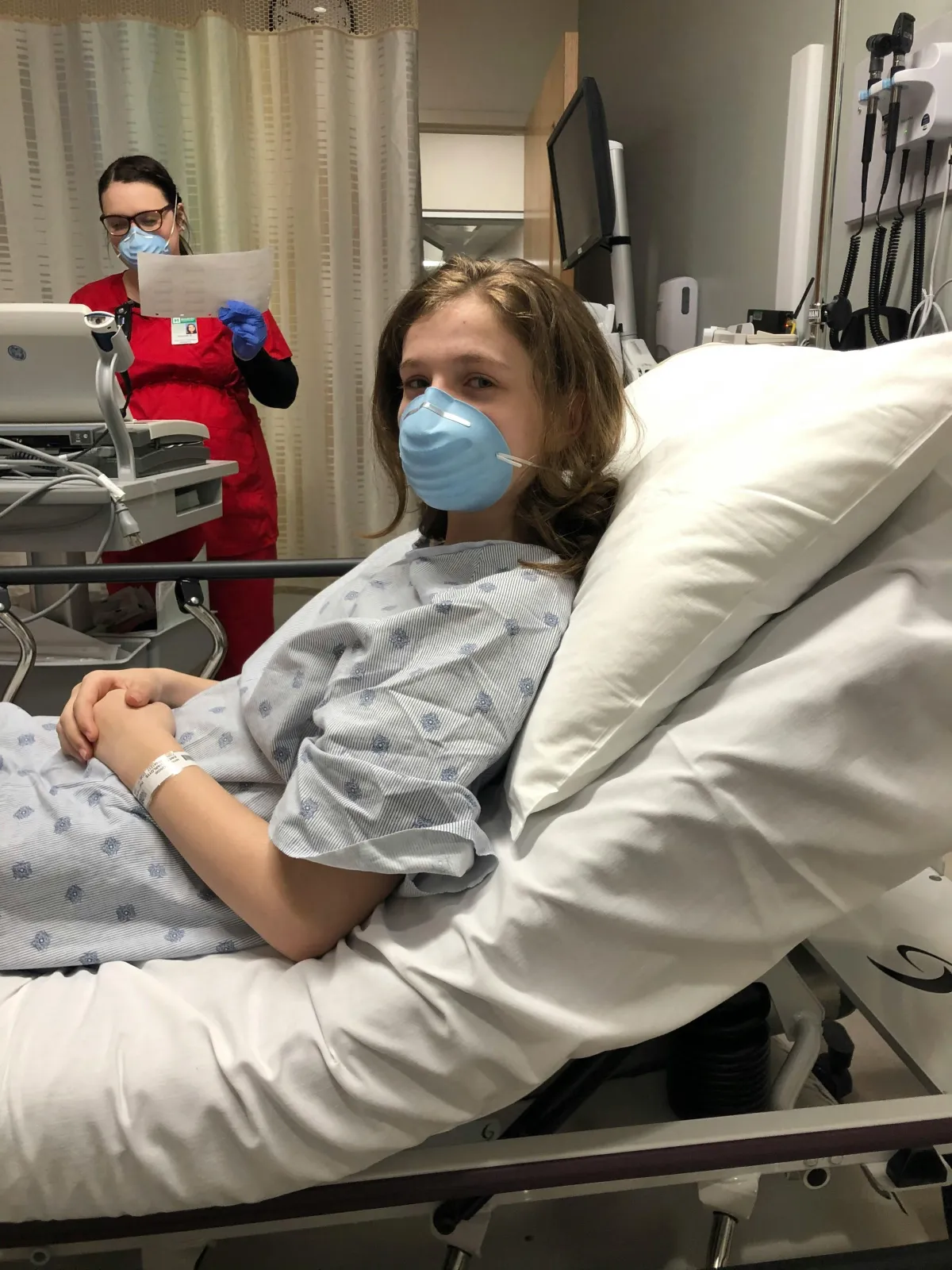
This is Real: PTSD After Surgery
This Is Real: PTSD After Surgery, Medical Trauma, and Why Women Carry More of It
Your incision healed. Everyone keeps telling you that you're lucky, that it could have been so much worse, that you should be grateful it's over. So why does some part of you still feel like you're bracing for something? Why does walking past the hospital make your chest go tight, months later, for no reason you can point to? If you've been quietly wondering whether something is wrong with you for still feeling this way, here's the short answer: nothing is wrong with you. This is real, it has a name, and you are far from the only one carrying it.
It's Not Just Combat or Assault — Surgery Counts Too
Most people hear "PTSD" and picture a soldier. Or a survivor of an attack. They don't picture someone who went in for a lumpectomy and woke up from a mastectomy because the surgeon found something worse once they were already inside. But PTSD after surgery in women is real, and it's more common than most doctors tell you.
Here's the thing nobody explains beforehand: your nervous system doesn't care if the threat was a bomb or an operating table. It just registers danger. And surgery, even routine surgery, can look exactly like danger from the inside.
What Counts as a "Traumatic" Medical Event
A traumatic medical event isn't just the dramatic ones. It's a planned surgery that didn't go the way you expected. A cancer diagnosis delivered in a rushed five-minute appointment. An ICU stay where you couldn't speak for yourself. Emergency procedures where there was no time to prepare. Any moment where your body was touched, altered, or controlled while you had no say in it.
If it felt like your life or your body was out of your hands, it counts.
Why "It Went Fine" Doesn't Mean Your Nervous System Agreed
Surgeons measure success by outcomes. Did the tumor come out clean? Did the heart start back up? But your nervous system measures something else entirely: did I feel safe?
Those things don't always match. You can come out of a "successful" surgery and still feel like your body went through something it hasn't recovered from. That's not you being dramatic. That's medical trauma recovery starting from a harder place than anyone warned you about.
So if something feels off since your surgery, even months later, let's talk about what that actually looks like.
What This Actually Feels Like - Real Symptom Examples
You're not going to flash back to the operating room every time a door slams. That's the movie version. Real post-surgical PTSD is quieter, and that's exactly why it gets missed.
Is Emotional Numbness a Sign of PTSD?
Yes. And it's one of the most overlooked ones. Numbness isn't the absence of feeling. It's your body's way of pulling the plug when things got too overwhelming to process in real time.
Maybe you notice you're not crying at things that used to move you. Maybe you feel like you're watching your own life instead of living it. That's not you being cold or ungrateful. That's a nervous system still trying to protect you from something that already happened.
The Quieter Signs — Flashbacks Aren't the Only Symptom
Here's what it can actually look like. Canceling follow-up appointments because walking into that building makes your chest tight. Lying awake at 2am replaying the moment they told you the diagnosis. Flinching when someone touches the spot where the incision was, even a year later. Feeling braced for bad news every time the phone rings from an unknown number.
None of that requires a war zone. It just requires a body that went through something hard and hasn't fully landed yet.
If any of that sounds familiar, the next question is obvious: why you, and why now.
Who's More Likely to Carry This — and Why It's Not Random
This isn't about being weak or overly sensitive. There's real data behind who ends up carrying this, and it points pretty clearly at women.
The Numbers on Women and PTSD
Women are about twice as likely as men to develop PTSD after a traumatic event. Lifetime prevalence runs somewhere around 8 to 12 percent for women, compared to roughly 4 to 6 percent for men. That gap shows up in medical trauma too, not just combat or assault.
Some of that comes down to biology. But a lot of it comes down to the kind of trauma women are more likely to face, and how often it happens earlier in life, which tends to compound its effect over time.
Why Bias in Healthcare Settings Raises the Risk
Here's the part that doesn't get said enough. Women and people of color are more likely to be dismissed when they report pain. More likely to wait longer for a diagnosis. More likely to be told it's stress, or anxiety, or "just how your body is," before anyone takes a closer look.
That's not a side note. That's part of why the trauma happens in the first place. Being unheard while something is actively wrong with your body is its own kind of harm. It compounds whatever the medical event itself already did.
So the question isn't whether this is in your head. It's what actually helps once you know it's real.
What Actually Helps -Treatments That Work
This is the part the VA wants every single person to hear this month: treatment works. Most people with PTSD never get help. That's not because help doesn't exist. It's because nobody told them this had a name, or that the name came with a path forward.
Therapies With Real Evidence Behind Them
A few approaches have strong research behind them for this exact kind of trauma. Cognitive Behavioral Therapy helps you untangle the thoughts that keep looping. EMDR helps your brain reprocess the memory so it stops hitting like it's happening right now. Cognitive Processing Therapy and Prolonged Exposure both work by helping you face the memory in small, controlled doses instead of avoiding it forever.
None of these require you to relive the worst day of your life in detail to get better. They're structured. They're paced. And they work for most people who stick with them.
What Recovery Can Look Like Day to Day
Therapy is the core of it, but healing isn't only what happens in a session once a week. It's also the small physical stuff. Feeling steady in your own clothes again. Not flinching when something touches the place that was cut or changed. Getting back into a body that still feels like yours, instead of one you're just managing.
That part matters more than people admit. The body that went through this is the same body that has to live in the world afterward.
It Doesn't Stop With the Patient — Caregivers Carry It Too
If you've been the one sitting in the waiting room, this part is for you too.
Recognizing Burnout and Secondary Trauma in Caregivers
Watching someone you love go through a frightening medical event leaves its own mark. Partners and family members can develop real trauma symptoms just from witnessing it. Exhaustion that sleep doesn't fix. Irritability that feels out of character. A constant low hum of dread between appointments.
That's secondary trauma, and it's just as real as the original event. Caregivers often put their own reaction last, because someone else's recovery feels more urgent. But you can't pour from an empty cup, and you're allowed to need support too.
You're Allowed to Take This Seriously
Here's what we want you to walk away with. You don't need a war story to justify this. You don't need someone else's trauma to be worse than yours before yours counts. If your body went through something that scared it, and some part of you hasn't fully come back from that yet, that's enough reason to take it seriously.
This isn't about wearing a label. It's about giving yourself permission to say something is still hard, and to go get help for it, the same way you'd get help for anything else that didn't heal right.
Conclusion
June is PTSD Awareness Month. June 27th is PTSD Awareness Day, named for Staff Sergeant Joe Biel, a North Dakota National Guard member the day was created to honor. The reason this day exists at all is because too many people who needed help never got it in time.
That's the whole point of this post. Treatment works. Most people with PTSD, veterans and civilians alike, including women recovering from surgery or a hard diagnosis, never reach out for the help that's already sitting there waiting for them. You don't have to be one of them.
If this sounds like you, or like someone you love, talk to a doctor or therapist about what you're carrying. And if you want more information, the VA's National Center for PTSD has resources for anyone, not just veterans, at ptsd.va.gov.
Frequently Asked Questions
~Is PTSD after surgery a real diagnosis?
Yes. PTSD doesn't only come from combat or assault. A traumatic medical event, including surgery, can meet the same diagnostic criteria. If your symptoms last more than a month and affect your daily life, it's worth talking to a doctor or therapist about it.
~Is emotional numbness a sign of PTSD?
It can be. Numbness is one of the most overlooked symptoms because it doesn't look like distress from the outside. It's your nervous system's way of protecting you when things felt like too much to process at the time.
~What counts as a "traumatic" medical event?
Anything where your body or your life felt out of your control. That includes planned surgery that turned into something bigger, a frightening diagnosis, an ICU stay, or an emergency procedure with no time to prepare.
~Who is more at risk of medical trauma?
Women are about twice as likely as men to develop PTSD after a traumatic event. Women and people of color also face higher rates of being dismissed or undertreated in medical settings, which adds another layer of harm on top of the medical event itself.
~What treatments actually work for medical or surgical PTSD?
Cognitive Behavioral Therapy, EMDR, Cognitive Processing Therapy, and Prolonged Exposure Therapy all have strong evidence behind them. Most people who stick with treatment see real improvement.
~How does this affect caregivers and family members?
Caregivers can develop their own trauma symptoms just from witnessing what happened to someone they love. This is called secondary trauma, and it deserves just as much attention and support as the original event.

